
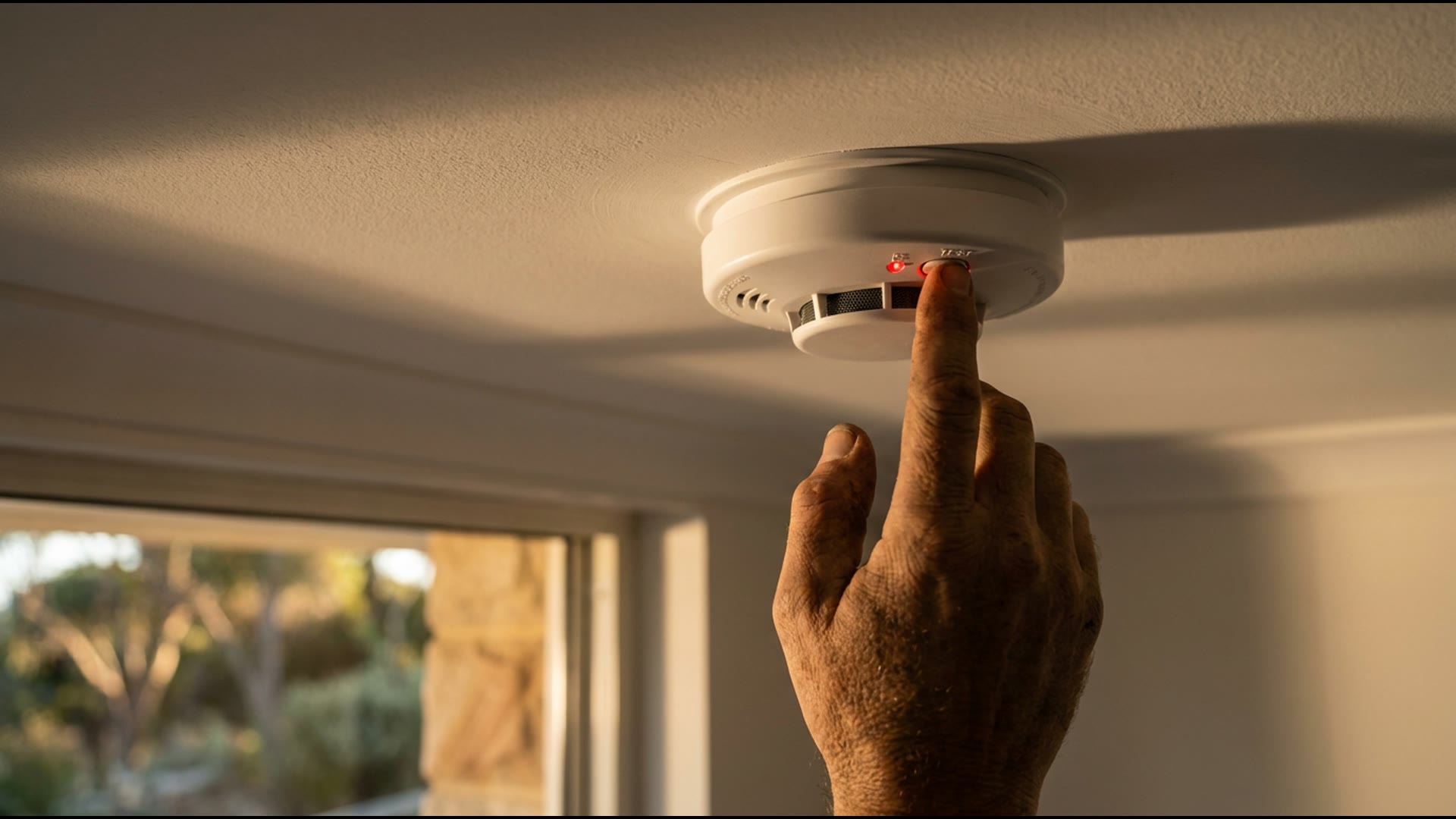
NSW legislation requires every residential dwelling to have working smoke alarms, and the current standard is interconnected photoelectric alarms with 10-year sealed lithium batteries. Interconnected means when one alarm detects smoke, every alarm in the house sounds, so the unit in the laundry triggers the one outside the bedroom at 2am, and you have time to get out. The cheaper 9V battery-operated alarms most homes still have don't meet that standard and don't interconnect.
What we do: a walk-through of the house to mark where alarms are required by code (outside each bedroom area, on every level, in specific corridor locations), supply photoelectric 10-year sealed alarms from a reputable brand, install them on either the existing 240V wiring or as a wireless-interconnected battery system, and test the whole network before we leave. For homes with an existing hardwired smoke system that's reached end of life, we strip and replace like-for-like with current-standard units.
On rental properties, owners and managing agents have specific testing and replacement obligations under NSW residential tenancy rules. We handle the annual testing, replace expired units, and provide written confirmation for your records. For owner-occupiers, we recommend annual testing and complete replacement every 10 years, that's the engineered life of the sealed battery and the sensor itself.
Older homes around Avalon, Newport and Bilgola often have a mix of expired alarms, missing alarms in legally required positions, and 9V units that have been silently dead for years. We bring the whole house up to current code in a single visit, usually in two to three hours for an average home.
When to call us
- Buying or selling a home and needing compliant alarms before settlement
- Rental property due for annual testing or alarm replacement
- 9V battery alarms in the house that you can't remember the last battery change for
- Existing hardwired alarms more than 10 years old
- Renovation or extension that's added rooms or changed the floor plan
- Family with young children or elderly relatives wanting full interconnected coverage
Our process
- Walk-through: We map the house against current NSW positioning requirements and note where alarms are missing, expired, or non-compliant.
- Quote: Fixed price covering supply, install, interconnection and testing of the full network.
- Supply: Photoelectric, 10-year sealed lithium alarms from a reputable brand (Brooks, Emerald, Quell, Clipsal Firetek).
- Installation: Hardwired alarms on a dedicated circuit where existing wiring allows, or wireless-interconnected battery units where it doesn't.
- Interconnection test: Trigger one alarm and confirm every other alarm in the house responds within seconds.
- Documentation: Written confirmation of install or test for your records, useful for sale, settlement or rental management.
Why choose Electrix all Blew
We're a family-run electrical business based in Bilgola Plateau. Over 38+ years on the Northern Beaches means we know the housing stock - weatherboard home, 1980s solid bricks, strata buildings - and what tends to fail in each.
We're licensed for electrical and air conditioning. We carry full public liability and contractor insurance. We turn up when we say we will, we call ahead when we're 20 minutes out, and we hold to 1-hour appointment windows.
Our 184 Google reviews sit at a 5.0 average. That's the result of doing the work properly the first time, not chasing reviews.
Frequently asked
What's the current legal standard in NSW?
Photoelectric smoke alarms with 10-year sealed lithium batteries, installed in specific positions (outside each bedroom area, on every level, certain corridors), and interconnected so they all sound together. Ionisation-type alarms are no longer the recommended technology.
How often should alarms be tested?
Once a month with the test button, once a year by a qualified electrician for rental properties, and full unit replacement every 10 years regardless. The 10-year sealed battery and the sensor inside both have a finite life.
Do you handle rental property compliance?
Yes. We do annual testing, replace expired or faulty units, and provide written confirmation for your records or your managing agent. Owners have specific obligations under NSW tenancy rules and we make it easy to meet them.
Hardwired or wireless-interconnected, which is better?
Hardwired is the gold standard if the existing wiring supports it. Wireless-interconnected alarms are an excellent retrofit option, same interconnection, no need to run new cables through the ceiling. Both meet code.
How long does a full house install take?
For an average home with 4 to 6 alarm positions, two to three hours including testing and walk-through. Larger homes or full rewires of older hardwired systems take longer.